What Is High Flow 3D Printing and Why Does It Matter?
High flow 3D printing allows a printer to push more material through its nozzle in less time. It helps increase
printing speed, reduce production time, and make large-scale 3D printing more practical. But how does it work,
and why does it matter for industrial 3D printing?
Let's take a closer look.
1. What Is High Flow 3D Printing?
High flow 3D printing refers to a printing process that uses a high material flow rate to deposit more filament
or plastic material in a shorter time.
In a standard FDM 3D printer, the extruder feeds filament into a heated hotend, where the material melts
and passes through the nozzle. The amount of material that can be extruded per second is limited by the
heating capacity, nozzle size, extruder performance, and material properties.
With a high flow 3D printing system, these components are designed to handle a much higher material output.
Instead of printing with thin lines and low material flow, a high flow 3D printer can use larger nozzles,
higher extrusion rates, and wider layer lines to build parts faster.
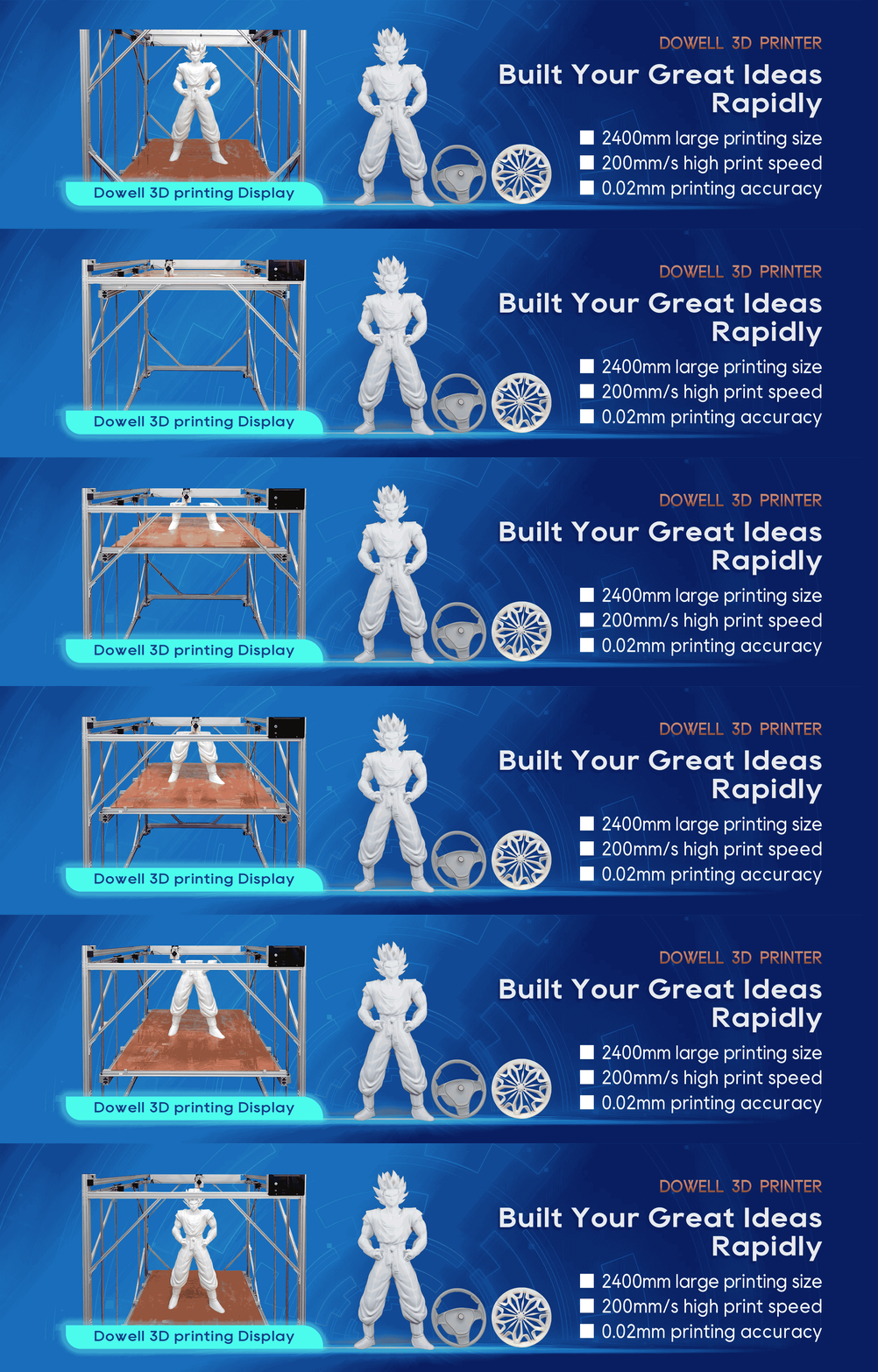
This technology is especially useful for large-format FDM 3D printing, where printing time can be a major challenge.
2. How Does High Flow 3D Printing Work?
High flow printing is not simply about increasing the printing speed. The entire extrusion system needs to
support a higher material output.
Several factors work together to achieve stable, high-volume extrusion.
High-Performance Extruder
The extruder needs enough feeding force to push a large amount of filament into the hotend without slipping
or skipping. A powerful extrusion system helps maintain a stable material supply during long printing jobs.
High-Flow Hotend
A high-flow hotend has a greater melting capacity, allowing more plastic to melt within a given time. This is
important because if the filament moves too quickly through the heating zone, it may not melt completely.
Larger Nozzle Diameter
Using a larger nozzle is one of the most direct ways to increase material output. For example, a 1.0 mm or
1.2 mm nozzle can deposit wider lines than a standard 0.4 mm nozzle.
For large industrial parts, larger nozzles can significantly reduce the number of printing paths required.
Optimized Printing Parameters
Printing speed, nozzle temperature, layer height, and extrusion rate must work together. If the flow rate is too
high for the hotend, the printer may experience under-extrusion, weak layer bonding, or inconsistent surface quality.
A well-matched printing system helps maintain both speed and print quality.
3. Why Does High Flow 3D Printing Matter?
For manufacturers, time is money. When producing large parts, traditional low-flow printing can take several
days or even longer.
High flow 3D printing helps solve this problem in several ways.
Faster Printing and Shorter Production Time
The biggest advantage is increased printing efficiency. By extruding more material per second, a printer can
build larger parts in less time.
This is particularly valuable for companies that need to produce large prototypes, custom parts, or multiple
products within tight deadlines.
Better for Large-Scale 3D Printing
Large parts require a considerable amount of material. High flow extrusion makes it possible to use wider
extrusion lines and thicker layers, helping reduce the total number of printing passes.
This makes high flow technology a practical choice for industrial FDM 3D printing and large-format manufacturing.
Lower Production Costs
Shorter printing times can help reduce machine operating hours and labor costs. For businesses handling
regular production orders, improving material output can also increase overall machine productivity.
However, actual cost savings depend on material prices, energy use, machine configuration, and production
requirements.
Improved Production Efficiency
High flow printing allows manufacturers to produce more parts within the same period. It can also make
large-format 3D printing more suitable for applications that were previously too time-consuming.
4. High Flow 3D Printing vs. Standard 3D Printing
What is the difference between high flow 3D printing and standard FDM printing?
The main difference is the amount of material the printer can extrude within a certain period.
| Comparison | Standard FDM Printing | High Flow 3D Printing |
| Material output | Lower | Higher |
| Printing speed | Generally slower | Potentially faster |
| Nozzle size | Often smaller | Can use larger nozzles |
| Layer height | Usually thinner | Can use thicker layers |
| Large part production | Takes more time | More time-efficient |
| Main application | Small parts and detailed models | Large parts and functional components |
It is important to understand that high flow printing does not always mean better results for every project.
Standard printing may still be a better choice for small models that require fine details and smooth surfaces.
High flow printing is most useful when production speed and part size are the main priorities.
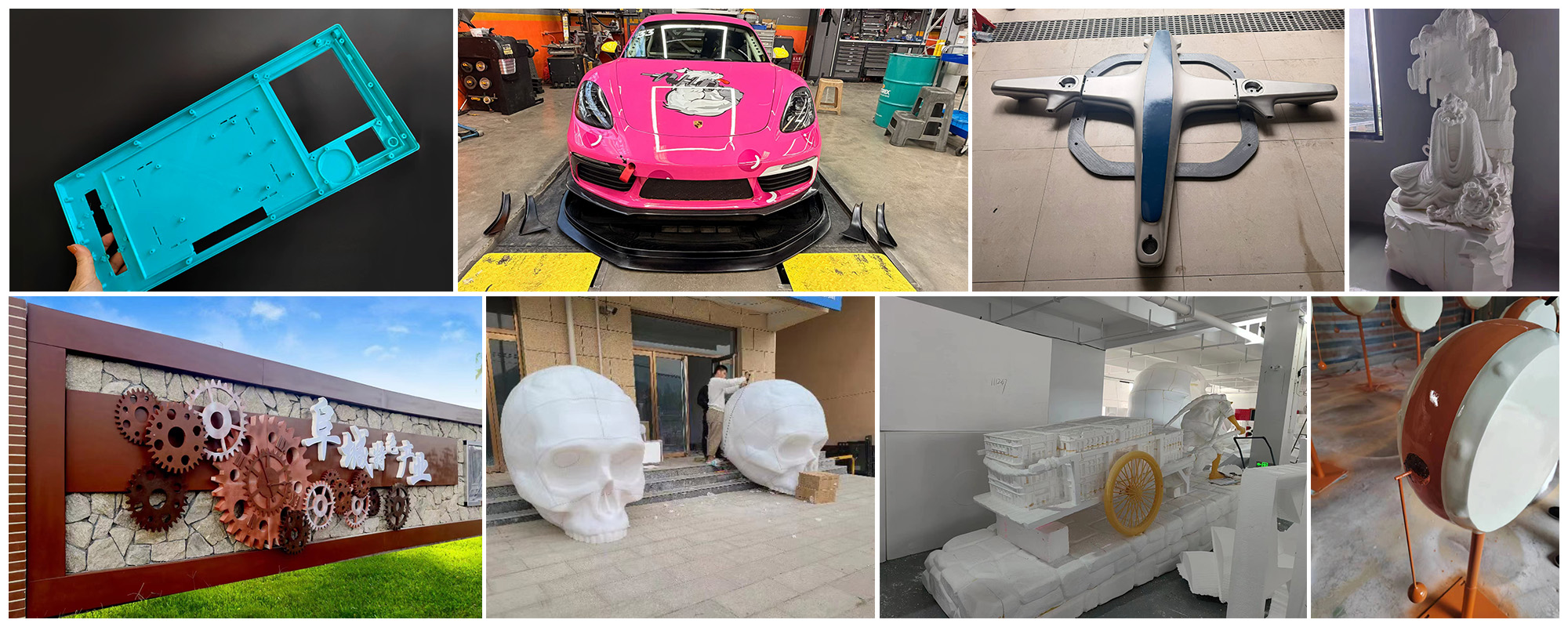
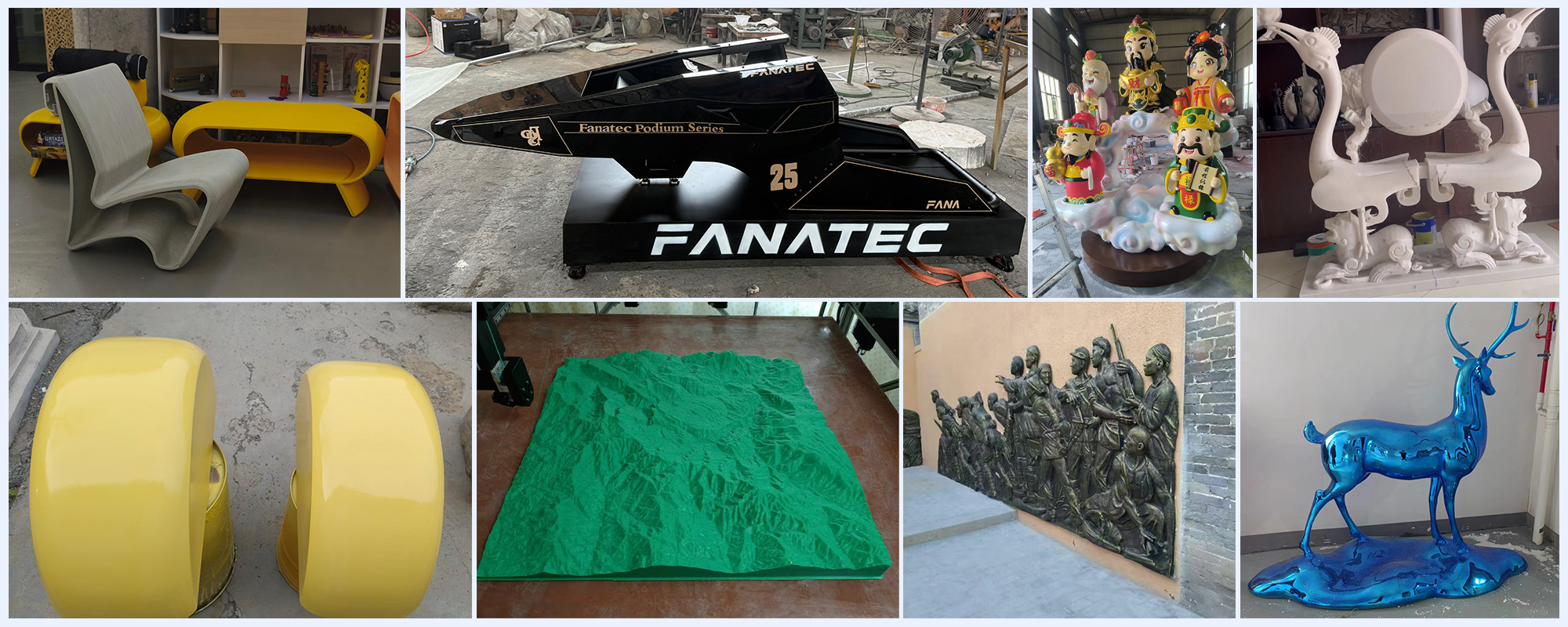
5. Where Is High Flow 3D Printing Used?
High flow 3D printing is becoming increasingly useful in industries that need large parts, shorter production cycles,
and flexible manufacturing.
6. Is High Flow 3D Printing the Future of Industrial 3D Printing?
High flow extrusion is becoming an important feature of industrial 3D printers as the demand for large-format
manufacturing continues to grow.
It's no longer just about build volume - nowadays material throughput capacity, extrusion stability, printing
speed as well as long term reliability matter for the manufacturers as well.
With a capable high flow extrusion system companies can produce larger parts, enhance manufacturing efficiency,
and also reduce non-productive waiting times.
For companies working with large FDM and FGF 3D printing, the combination of high flow and the huge build
volume opens new worlds.
But high flow performance should always be matched with printing quality, material compatibility, and
machine stability in any case. If the printer cannot maintain consistent results throughout the print run,
a high extrusion flow alone will be of little help.
Conclusion
High flow 3D printing does not mean that you can just print faster; rather, it allows you to produce more
material and optimize production to such an extent that large-format 3D printing becomes a practical solution
for industrial applications.
High flow extrusion technology enables manufacturers to complete bigger projects with less printing time,
whether it is automotive parts, furniture, industrial molds, or large sculptures.
If your business is looking for a more efficient way of carrying out large production, investing in an industrial
3D printer with a reliable high flow extrusion setup is worth considering.
DOWELL3D focuses on large-format industrial FDM and FGF 3D printing solutions to assist manufacturers
in transforming enormous design ideas into real products with efficient and reliable printing technology.