Does 3D Printing Cause a Smell?
If you've spent any time around a running 3D printer, you've probably noticed something in the air. Sometimes
it's faint and almost sweet. Other times, it hits you like a wave of hot plastic that makes you want to open every
window in the workshop.
So what's actually happening here? And more importantly — should you be worried about it?
Let's cut through the noise and talk about what causes 3D printing odors, which materials are the biggest culprits,
and what you can actually do to keep your workspace safe and comfortable.
Why Your 3D Printer Smells (And What Those Fumes Actually Are)
Here's the simple truth: when you heat filament to its melting point — usually somewhere between 200°C and 300°C
— the material doesn't just melt. It also releases tiny airborne particles and gases called volatile organic compounds
(VOCs). That's what you're smelling.
Alongside VOCs, 3D printers also emit ultrafine particles (UFPs) — microscopic particles so small they can bypass
your lungs' natural defenses and travel deep into your respiratory tract. Research from NIOSH found that 3D printers
can release particles at rates 200 to 300 times higher than what you'd find in normal ambient air.
The smell comes from a few key sources: the hot end where the filament melts, the heated build plate, and the
filament itself. But not all filaments are created equal when it comes to odor.
Which Filaments Smell the Most?
This is where things get interesting — and where your choice of filament makes a huge difference.
PLA is the mildest of the bunch. Because it's derived from natural sources like cornstarch, it produces a slightly
sweet, tolerable scent that most users find perfectly fine. It's the go-to for indoor printing, especially in shared
spaces.
PETG falls somewhere in the middle — a faint plastic smell that's noticeable but not overwhelming.
ABS is where things get pungent. This material releases a sharp, acrid odor that many describe as industrial or
chemical-like. The primary culprit is styrene, a chemical known for its strong, unmistakable fumes. If you've ever
printed with ABS in a closed room, you know exactly what I'm talking about.
Nylon has its own distinctive smell — some describe it as fishy or like burnt plastic. And resin printing (SLA/DLP)
produces some of the most noticeable and chemical-like odors due to acrylate compounds released during curing.
Here's a quick reference:
| Filament | Odor Level | What It Smells Like |
| PLA | Low | Mild, slightly sweet |
| PETG | Low–Medium | Faint plastic |
| ABS | High | Strong, acrid, chemical-like |
| Nylon | Medium–High | Fishy or burnt plastic |
| Resin | High | Sharp, chemical, acrid |
Are 3D Printer Fumes Actually Harmful?
This is the question everyone wants answered — and the honest answer is: it depends.
Studies have shown that material extrusion 3D printing is a source of airborne particulate matter and VOCs
that could pose health concerns to occupants indoors, especially in poorly ventilated spaces. Operating 3D
printers in a home environment can result in indoor air pollution levels that reach or exceed hazardous thresholds
defined by industrial occupational safety standards.
For materials like PLA and PETG, the risks are generally low when used with reasonable ventilation. But ABS
and resin are a different story. Prolonged exposure to fumes from these materials can irritate your eyes, throat,
and lungs. Some of the compounds released — like styrene from ABS — are suspected carcinogens.
That said, research also shows that airborne concentrations of specific VOCs from desktop 3D printers typically
fall below workplace exposure limits set by health and safety agencies. The keyword here is workplace — those
limits are designed for healthy working-age adults in industrial settings, not for children or sensitive populations
in home environments.
The bottom line? 3D printer fumes are something to take seriously, but not something to panic about. With the
right precautions, you can print safely without breathing in stuff you shouldn't.
How to Reduce 3D Printer Smell and Stay Safe
If you're printing regularly — especially with materials like ABS, Nylon, or resin — here are the practical steps
that actually work:
1. Ventilation is your first line of defense. Open windows, use exhaust fans, and create a steady flow of fresh air
through your workspace. A window fan blowing outward can make a huge difference. If you're in a small room,
consider moving your printer to a garage or workshop with better airflow.
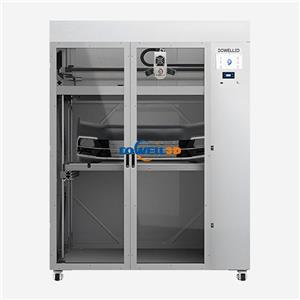
2. Use an enclosure. An enclosed printer or an external enclosure helps contain fumes at the source before they
spread throughout the room. Enclosures also help maintain stable chamber temperatures — a bonus when
printing materials like ABS that are prone to warping.
3. Add filtration. The gold standard is a combination of HEPA filtration (for capturing ultrafine particles) and
activated carbon (for neutralizing VOCs and odors). Some setups can remove up to 99.95% of nanoparticles.
If your printer doesn't have built-in filtration, there are plenty of aftermarket options — from simple carbon
filter boxes to full fume extraction systems.
4. Choose your filament wisely. If you're printing in a shared space or a home environment, stick with low-odor
filaments like PLA and PETG whenever possible. Save the ABS and Nylon for when you have proper ventilation
set up.
5. Watch for symptoms. Headaches, dizziness, or throat irritation during printing are red flags. If you notice any
of these, improve your airflow immediately or stop printing until you've sorted out your setup.
What About Large Format Printing?
If you're working with a large-format 3D printer or an industrial 3D printer, the considerations change a bit. Bigger
printers mean bigger prints — which means longer run times and more material being heated over extended periods.
That adds up to more emissions over time.
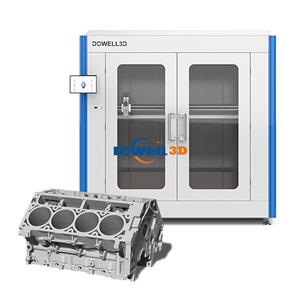
For large-format printing, having a well-designed enclosure with active fume extraction becomes even more critical.
Some industrial setups use dual-stage fume extraction systems that capture emissions throughout the entire printing
process. And if you're printing with high-temperature engineering materials, the emissions profile can be significantly
different from what you'd get with a desktop PLA print.
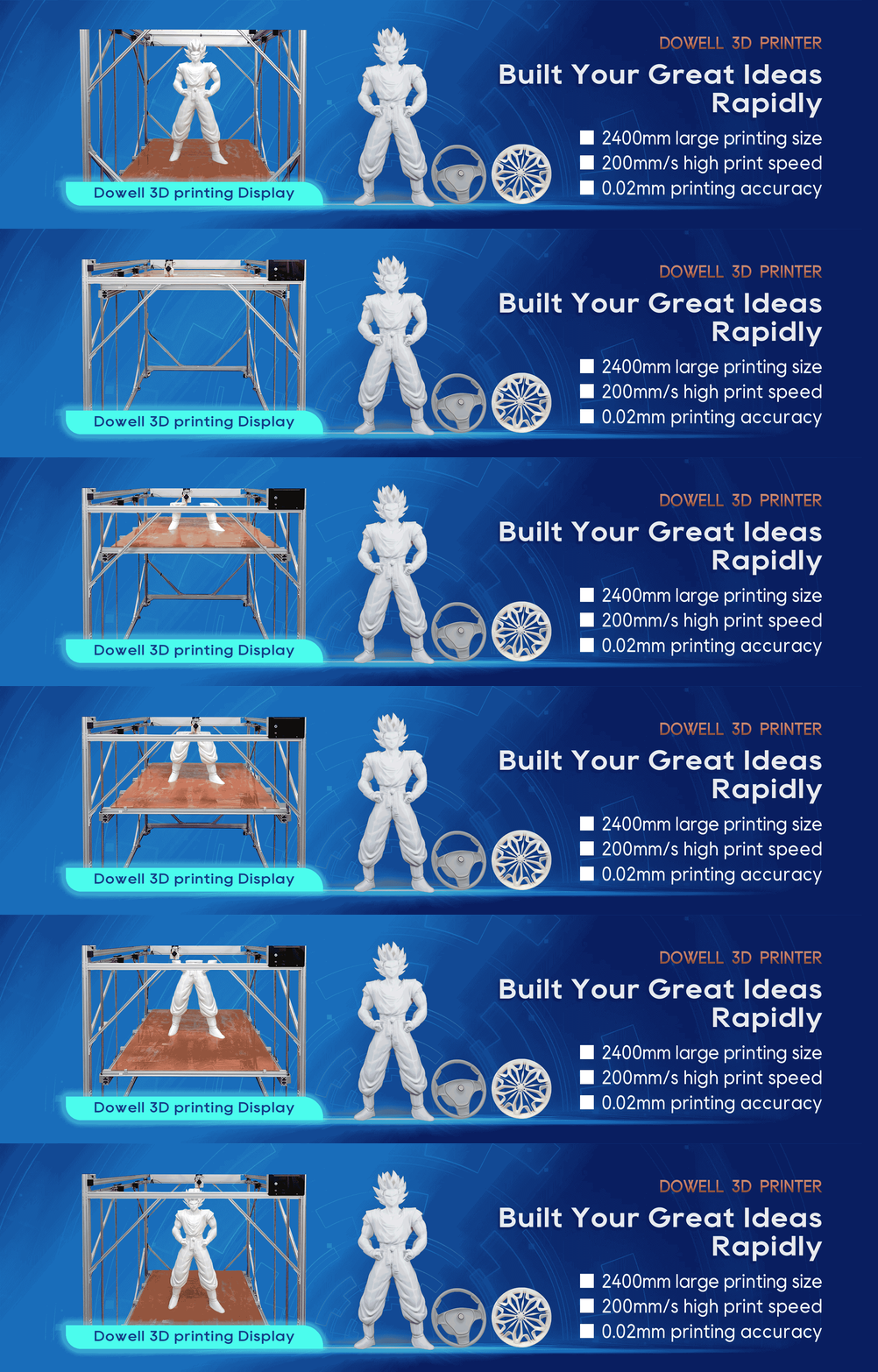
This is where choosing the right equipment matters. When you're investing in a large-format 3D printer, you want
something that's built with safety in mind — not just print volume and speed. Features like enclosed build chambers
and integrated filtration aren't just nice-to-haves; they're essential for protecting your health during those long,
multi-day prints.
At DOWELL 3D, we understand that high-precision 3D printer users need more than just accuracy. You need a machine
that you can run confidently in your workspace without worrying about what's floating around in the air. That's why
our large-format machines are designed with thoughtful engineering that prioritizes both performance and safety —
so you can focus on bringing your ideas to life, not on holding your breath.
Conclusion
Does 3D printing cause a smell? Yes — but the real question is what you do about it.
The good news is that most of the odor and emission issues can be managed effectively with the right approach:
good ventilation, proper enclosures, quality filtration, and smart filament choices. PLA and PETG are your friends
for everyday printing. Save the ABS and engineering materials for when you've got your safety setup dialed in.
And if you're in the market for a large-format 3D printer that balances precision, reliability, and workspace safety,
it's worth looking at machines that come with enclosed designs and built-in emission control features. Your lungs —
and your prints — will thank you.