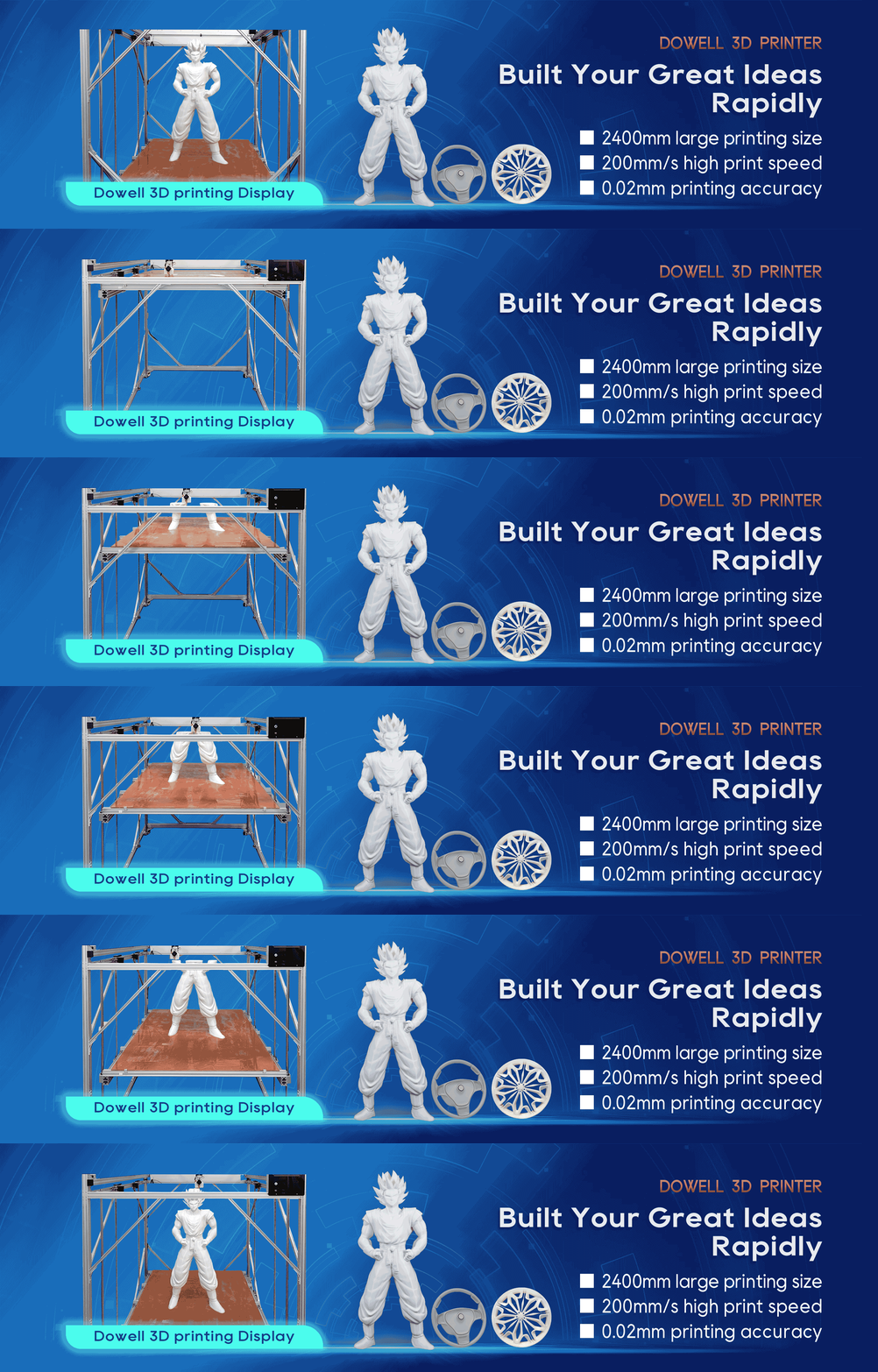
Large Format 3D Printer Buying Guide for Businesses
Why More Businesses Are Choosing Large Format 3D Printers
For many companies, traditional manufacturing methods are no longer the only option for producing prototypes,
functional parts, and customized products. A large format 3d printer provides businesses with a faster, more
flexible, and cost-effective way to create large-scale models and end-use components.
Unlike standard desktop machines, a big 3d printer is designed for projects that require larger build volumes,
higher productivity, and more reliable performance. From automotive components and industrial prototypes
to architectural models and custom tooling, large-scale 3D printing is becoming an important part of modern
manufacturing workflows.
However, choosing the right machine is not always easy. Businesses need to consider print size, reliability,
operating costs, application requirements, and long-term value before investing.
This guide will help you understand the key factors when selecting a large format 3d printer for business
applications.
1. Understand Your Business Printing Requirements First
Before searching for an industrial 3d printer, the first step is understanding what you actually need to produce.
Many companies make the mistake of choosing a printer based only on the maximum build size. While a large
build volume is important, it is not the only factor that determines whether a machine fits your workflow.
Consider the following questions:
What is the largest part size you need to print?
Will you produce prototypes, functional parts, molds, or display models?
How often will the printer operate?
Do you need continuous production capability?
What level of surface quality and accuracy is required?
For example, an engineering company producing automotive prototypes may need a different solution compared
with a design studio creating large visual models.
A well-selected large-format 3D printer should match your actual production goals instead of simply offering
the biggest possible size.
2. Build Volume: The Most Important Feature of a Large Format 3D Printer
The biggest advantage of a large format machine is the ability to print larger objects in one piece.
A larger build volume allows businesses to:
Reduce the need for assembling multiple smaller parts
Save production time
Improve structural strength
Create more realistic prototypes
Simplify the design process
A professional big 3d printer can significantly improve efficiency when working with large industrial components.
For companies producing oversized parts, a large build area can directly reduce labor costs and post-processing work.
When comparing machines, look beyond advertised dimensions. Check whether the actual printable area is
suitable for your applications and whether the printer maintains stable performance across the entire build platform.
3. Print Quality and Accuracy Matter for Professional Applications
Large-scale printing is not only about size. Accuracy and consistency are equally important.
A reliable industrial 3d printer should provide:
Stable temperature control
Strong mechanical structure
Precise motion systems
Consistent layer quality
Reliable long-duration printing performance
Large parts often require many hours or even days to complete. Any instability during printing can lead to
wasted time and material costs.
For businesses, a printer that delivers consistent results is usually more valuable than a machine with impressive
specifications but unreliable operation.
4. Material Compatibility and Production Flexibility
Different industries have different material requirements. Before purchasing a large format 3d printer, companies
should consider what types of filament they plan to use.
The choice of filament affects:
Mechanical strength
Heat resistance
Surface appearance
Durability
Application suitability
A flexible industrial printing system that supports different filament options gives businesses more freedom
to handle various projects.
For example:
Engineering applications may require stronger filament options.
Large prototypes may prioritize cost efficiency.
Educational or design applications may focus on easy operation.
Choosing a printer with broad filament compatibility can help businesses adapt to future projects without
replacing equipment.
5. Reliability for Long-Term Business Operations
A business 3D printer is different from a hobby machine. Companies need equipment that can handle regular
operations with minimal interruptions.
Important reliability features include:
Stable Frame Design
Large machines require strong structures to reduce vibration and maintain print accuracy during long printing
processes.
Automatic Functions
Features such as automatic leveling and intelligent monitoring can reduce setup time and improve user experience.
Easy Maintenance
A printer designed for business environments should allow quick maintenance and convenient replacement
of common components.
For companies investing in a professional large format 3d printer, reliability directly impacts productivity and
return on investment.
6. Consider Total Cost Instead of Only Purchase Price
The cheapest printer is not always the most economical choice.
Businesses should evaluate:
Equipment cost
Operating costs
Maintenance requirements
Downtime risks
Production efficiency
A high-quality industrial 3d printer may have a higher initial investment but can provide better value through
stable performance and reduced production delays.
When calculating costs, think about the long-term benefits:
Faster prototyping cycles
Reduced outsourcing expenses
More design flexibility
Lower production barriers
A suitable large-format machine can become a valuable manufacturing tool rather than simply another piece
of equipment.
7. Applications of Large Format 3D Printers Across Industries
Large format 3D printing is now used in many industries, including:
Automotive
Companies use large printers for:
Vehicle prototypes
Custom components
Testing models
Manufacturing tools
Aerospace
Large-scale printing helps create lightweight prototypes and specialized parts.
Architecture and Construction
Design teams use big 3d printers to create:
Large architectural models
Concept demonstrations
Complex structures
Manufacturing
Factories use industrial 3D printing for:
Jigs and fixtures
Production aids
Customized equipment parts
Product Development
Design teams can quickly test and improve new ideas without expensive traditional manufacturing processes.
8. Why Businesses Choose Dowell 3D Large Format 3D Printers
For companies looking for a dependable large format 3d printer, Dowell 3D focuses on providing solutions
designed for larger-scale printing requirements.
With a focus on large build volume, stable performance, and practical industrial applications, Dowell 3D printers
are suitable for businesses that need reliable equipment for prototyping, production assistance, and customized
manufacturing projects.
Instead of choosing a machine only by specifications, businesses should choose a printing solution that supports
their daily workflow and future growth.
9. Common Mistakes When Buying a Large Format 3D Printer
Before making a purchase, avoid these common mistakes:
Choosing Size Without Considering Application
A larger printer does not always mean better results. The machine should match your production needs.
Ignoring Long-Term Reliability
A printer that frequently requires adjustments can increase operating costs.
Focusing Only on Price
Lower initial costs may lead to higher expenses later due to maintenance and downtime.
Not Considering Future Growth
Your current projects may be small, but business requirements often expand. Selecting a scalable solution can
provide better long-term value.
Conclusion: How to Choose the Right Large Format 3D Printer for Your Business
Choosing the right large format 3d printer requires careful evaluation of your applications, production goals,
materials, and expected workload.
A professional industrial 3d printer can help businesses reduce development time, improve customization
capabilities, and create larger products more efficiently.
Whether you are producing prototypes, industrial components, models, or customized parts, investing in the
right big 3d printer can bring significant advantages to your business.
The best choice is not always the largest or most expensive machine — it is the printer that delivers reliable
performance, meets your production needs, and supports your future growth.