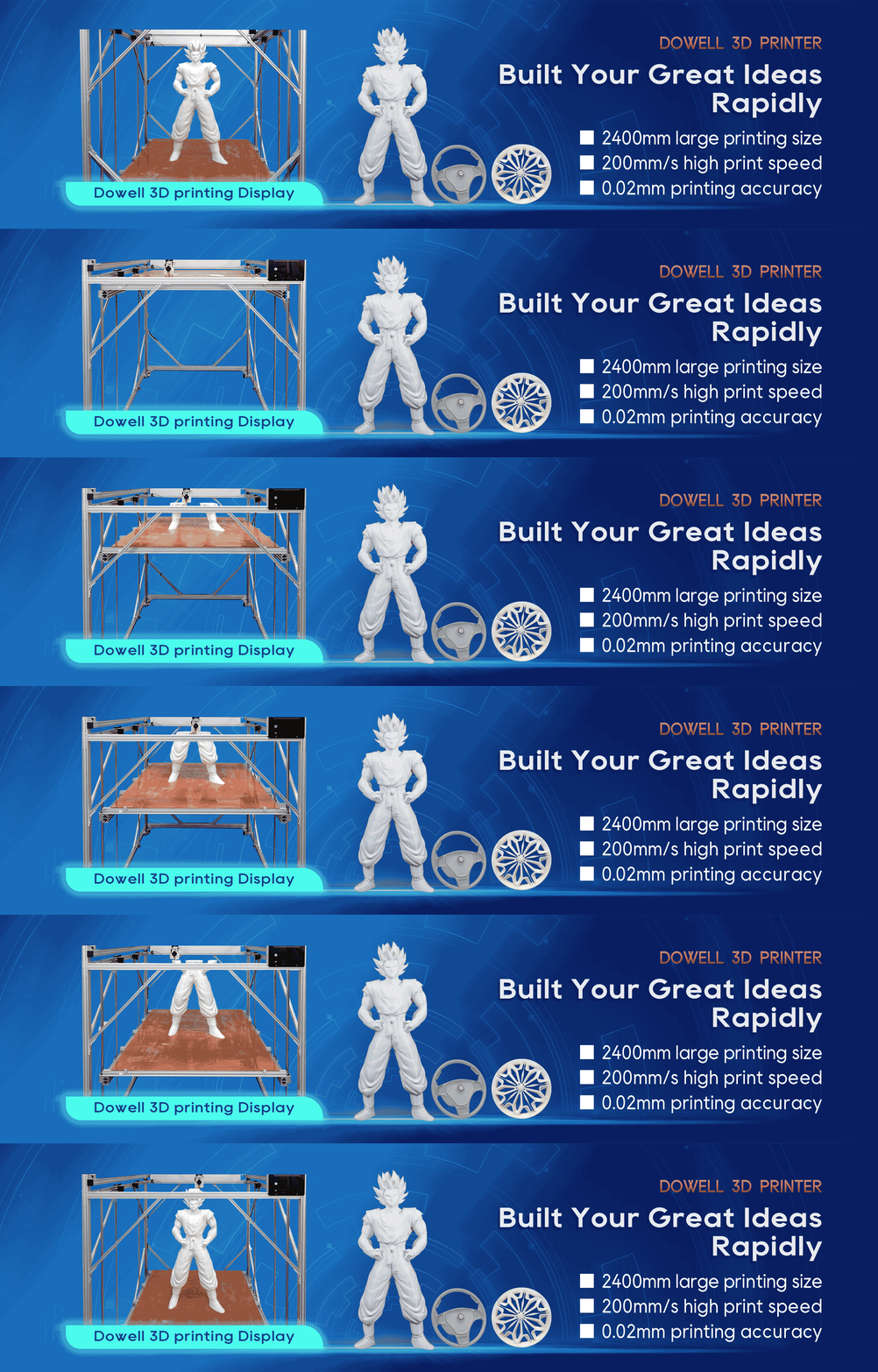
The Key Advantages of Large Format 3D Printer
In the modern, rapidly evolving world of 3D printing, companies are increasingly turning to large-format 3D printers
to create complex, high-quality products as well as prototypes. While many are familiar with desktop-sized 3D printers,
large-format 3D printers are becoming increasingly popular due to their ability to produce much larger parts and
prototypes. Regardless of your industry—whether it be automotive, architecture, or industrial design—a large-format
3D printer can truly revolutionize your workflow. If you're considering investing in a 3D printer for your business or
projects, understanding the key advantages of large-format 3D printers is essential.
Here are the reasons why a large-format 3D printer might be the very solution you have been searching for.
What Is a Large-Format 3D Printer?
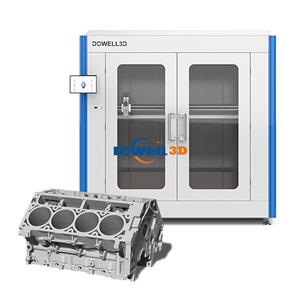
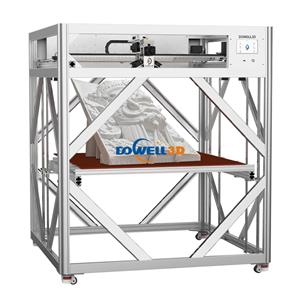
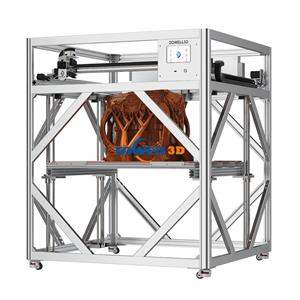
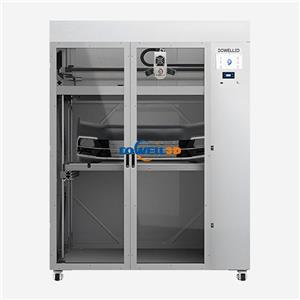
A large-format printer enables the creation of objects significantly larger than those produced by standard printers.
It can be used for full-scale prototyping, creating large-scale models, life-size sculptures, as well as large signage and
unique exhibition stands. This type of equipment plays a pivotal role in the field of large-format printing, helping to
produce visual materials that stand out impressively, even in the busiest environments.
Advantages of Large-Format Printers
1. Ability to Print Larger Parts
One of the most obvious advantages of large-format 3D printers is their capability to print large parts or prototypes
in a single print job. For industries like aerospace or automotive, being able to produce large-scale components
without the need for assembly or multiple printing stages is a game changer. The ability to create large models with
precise dimensions improves efficiency, reduces errors, and cuts down on labor costs associated with post-processing
or combining multiple parts.
This is especially beneficial for industries that require functional prototypes or end-use parts. The reduction of time
and labor required for assembly translates into faster time-to-market for new products.
2. Cost-Effective Prototyping and Production
In the past, creating large prototypes or parts often required expensive molds, tooling, and manufacturing processes.
With large-format 3D printers, however, you can print parts directly from digital models. This eliminates the need for
costly and time-consuming traditional manufacturing methods like CNC machining or injection molding, making it
more affordable to produce large parts.
Furthermore, large-format 3D printing can reduce material waste significantly. Traditional manufacturing techniques
often produce a lot of scrap material, while 3D printing only uses the exact amount of filament needed to create the part.
This makes it a more sustainable choice, both environmentally and economically.
3. Customization and Complex Geometries
Large-format 3D printers excel at producing customized parts and parts with complex geometries that would be difficult
or impossible to achieve using traditional manufacturing methods. Whether it's intricate internal structures or unusual
external shapes, large-format printers allow for more freedom in design.
This is particularly beneficial for industries such as medical, automotive, and architecture, where custom solutions are
often needed. For example, creating custom-fit prosthetics, specialized car components, or architectural models that
require precise and detailed features becomes much easier with a 3D printer.
4. Increased Design Flexibility
With the ability to print large-scale models, designers and engineers have greater flexibility to explore more innovative
and unique designs. No longer are they restricted by the size limitations of traditional manufacturing processes. Large-
format 3D printing allows for rapid iterations, meaning that designs can be adjusted quickly without significant cost increases.
Whether you're developing a concept for a new product or refining an existing design, the ability to test and refine models
in real time is invaluable. This reduces the risk of design flaws and helps bring products to market more quickly.
5. Rapid Prototyping and Reduced Lead Times
One of the most significant advantages of large-format 3D printing is the speed at which prototypes can be created.
Traditional methods often take weeks or even months to create a prototype, especially when large components or parts
are involved. In contrast, large-format 3D printers can create prototypes within hours or days, enabling much faster
design validation.
This means that businesses can shorten the development cycle, accelerate product testing, and bring their innovations
to market faster than ever before. The ability to prototype large components in a fraction of the time also means reduced
costs for both design iterations and production time.
6. Lower Inventory Costs
For industries that need to produce large parts in relatively low quantities or on demand, large-format 3D printing offers
the advantage of producing parts only when needed. This can significantly reduce inventory costs, as there's no need to
maintain large stockpiles of parts or wait for overseas production.
Additionally, when dealing with large components that have low production volumes, traditional manufacturing methods
can become prohibitively expensive due to tooling and setup costs. With 3D printing, you can print what you need, when
you need it, at a fraction of the cost.
7. Improved Accuracy and Precision
Large-format 3D printers, especially those manufactured with high-quality components like Dowell 3D printers, offer
impressive levels of accuracy and precision. This makes them ideal for creating parts that require tight tolerances and
specific measurements.
Whether it's an intricate part for a machine or a customized architectural model, high precision ensures that the final
product meets the desired specifications with minimal errors. In industries where quality control is paramount, this
can significantly reduce the likelihood of costly mistakes or rework.
8. Reduced Waste and Environmental Impact
Compared to traditional manufacturing techniques, large-format 3D printing generates significantly less waste. With
traditional methods, excess material is often discarded, leading to a higher environmental impact. However, 3D printing
only uses the necessary amount of filament required to print the object, making it a more sustainable choice for large-
scale manufacturing.
By choosing a large-format 3D printer, businesses can reduce their overall carbon footprint while maintaining a high
level of production efficiency. This is especially important as more industries are being held accountable for their
environmental impact and sustainability practices.
9. Ability to Use a Variety of Filament Materials
Large-format 3D printers offer versatility in terms of filament materials, which can be selected based on the specific
requirements of a project. Whether you need standard filament for prototyping—such as PLA, ABS, or PETG—or specialized
materials for end-use parts, large-format printers can accommodate a variety of filament types, including those with
enhanced mechanical properties, durability, and resistance to heat or chemicals.
This flexibility allows businesses to experiment with different materials to optimize performance and functionality,
ultimately resulting in better products.
10. Increased Production Capacity
Large-format 3D printers can operate for extended periods, producing large parts or multiple components in one run.
This means that businesses can increase production capacity without the need for additional machines or labor. The
ability to print large parts without having to divide the work into smaller units also speeds up the production process.
For companies that need high-volume production of large-scale parts, investing in a large-format 3D printer can lead
to greater efficiency and cost savings over time.
Conclusion: Why Consider a Large-Format 3D Printer?
Large-format 3D printers offer unparalleled benefits for industries that require the production of large-scale parts,
prototypes, or custom designs. They allow for faster prototyping, reduced material waste, greater design flexibility,
and cost-effective production.
If your business needs to stay ahead of the competition and accelerate product development, investing in a large-format
3D printer can give you the edge you need. At Dowell 3D, we specialize in producing high-performance large-format 3D
printers that deliver outstanding results and meet the unique needs of various industries.
Contact us today for more information about our high-quality large-format 3D printers.