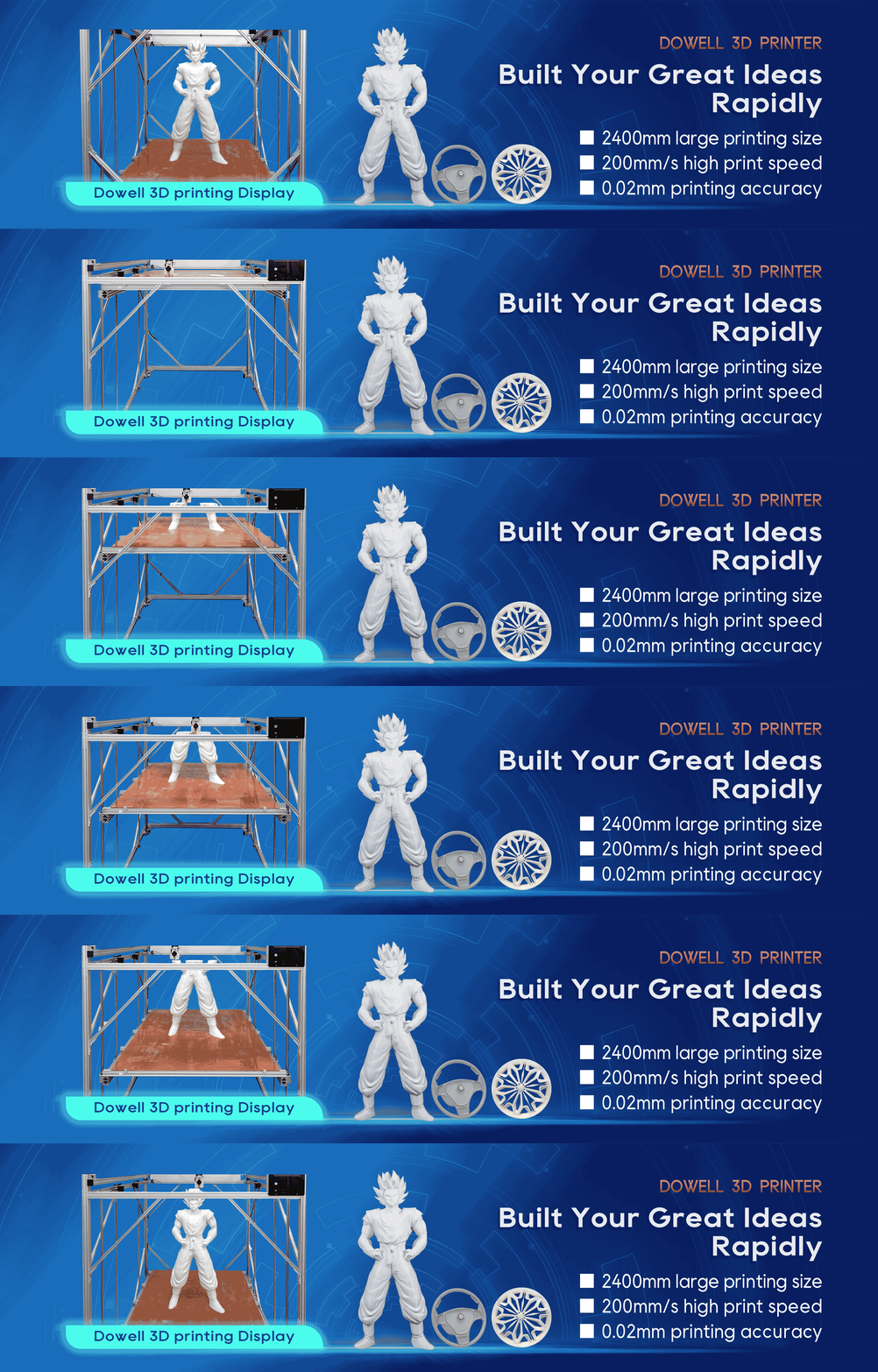
FGF 3D Printing: How Screw Extruders Improve Material Flow
In large-format 3D printing, consistent material flow can make a real difference to production efficiency and
part quality. For manufacturers printing automotive models, industrial molds, and large functional prototypes,
an unstable extrusion process can lead to uneven layers, poor surface finish, and unnecessary production delays.
Unlike conventional filament-based systems, an FGF printer feeds plastic pellets directly into the extrusion system.
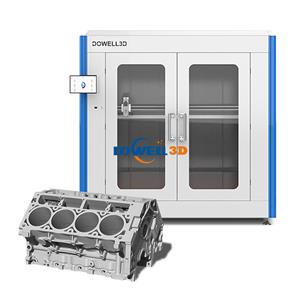
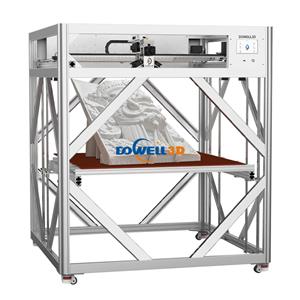
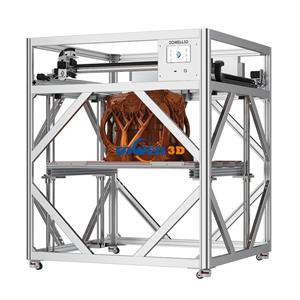
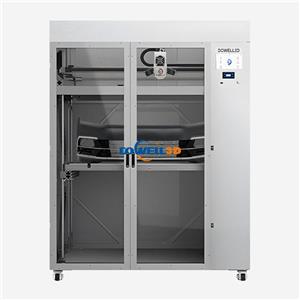
This is why DOWELL3D integrates a 3-stage screw extrusion system into its DP-A series FGF pellet 3D printers.
With a maximum extrusion flow rate of 4,000–5,000 g/h, the system is designed to support high-output pellet
printing and helps move, melt, and deliver the material continuously, making it a practical solution for
manufacturers looking to improve production efficiency.
How Does a Screw Extruder Work in FGF 3D Printing?
Put simply, the mechanism isn't too complicated at first glance. Plastic pellets get into the extruder from a feeding
system. As the screw rotates, they push the material through heated zones, and as the pellets melt, they eventually
become a continuous flow of molten plastic. The material is then deposited through a nozzle, building the part layer
by layer.
The screw does more than push material forward. Its geometry, rotation speed, and interaction with the heating
system all influence melting efficiency, extrusion pressure, and output consistency.
The main feature of the pellet printer process eliminates the need to convert raw pellets into filament before printing.
In principle, industrial thermoplastic materials can now be utilized more easily, as long as the material is compatible
with a given machine.
3 Key Benefits of Screw Extrusion for Better Material Flow
1. More Stable Extrusion
Uneven material output will result in a layering of gaps, weak layer bonding, or inconsistency in surface finish.
A well-designed screw extrusion system helps maintain a steady supply of molten material, supporting more
uniform deposition during long printing jobs.
For manufacturers using a granule 3D printer to produce large parts, stable extrusion is particularly important
because even small flow variations can become more noticeable across a large printed surface.
2. Higher Material Throughput
Traditional filament-based printing methods are often constrained by the filament feed rate and the processing
capacity of the print head (hot end). In contrast, Fused Granular Fabrication (FGF)—an additive manufacturing
technology based on screw extrusion—takes a different approach by processing raw material in granular form.
Through optimized screw design, robust heating capabilities, and strategic nozzle configuration, industrial-grade
FGF printers can achieve high material throughput, effectively meeting the demands of large-format manufacturing.
In scenarios where high surface detail is less critical than production speed, using larger nozzles can further
increase the material deposition rate.
The actual material output depends on the specific material used, processing temperatures, nozzle size, and
the printer's configuration.
3. Greater Flexibility in Material Selection
Pellet-based 3D printers allow manufacturers to utilize a wide range of thermoplastic raw materials without
the need for prior conversion into filament. Depending on the extruder design and processing conditions,
available materials include PLA, ABS, PETG, as well as various reinforced or recycled polymers.
For businesses producing custom tooling, automotive prototypes, molds, or functional parts, this flexibility
helps streamline the material preparation process, leading to more cost-effective production.
What Should You Look for in an Industrial FGF Printer?
The screw extrusion mechanism alone does not guarantee optimal printing results. When evaluating equipment,
take the following factors into account:
Extrusion capacity:
Make sure the output meets your production requirements.
Temperature control:
Appropriate heating and temperature management are essential for stable melting.
Material compatibility:
Check whether the extruder supports your intended pellet size, polymer, and composite formulation.
Flow adjustment:
Adjustable extrusion parameters help match material output to nozzle size and printing speed.
Build volume:
Choose a machine that accommodates your largest parts without unnecessary segmentation.
These factors work together to determine whether a pellet-based system can deliver the balance of throughput,
consistency, and part quality your application requires.
Is a Pellet 3D Printer Right for Your Production?
If your business regularly prints large components, prototypes, molds, or custom tooling, a screw-extrusion
pellet 3D printer may offer a more practical production route than filament-based printing.
Dowell's industrial FGF pellet 3D printers feature a screw extrusion system and automatic pellet feeding, with
configurations designed for large-format manufacturing. The DP-A series supports a range of build sizes and
material-processing requirements, helping manufacturers explore more efficient ways to produce large parts.
Choosing the right configuration starts with understanding your material, part dimensions, and required
production output.
Looking for an FGF 3D printing solution for your application?
Contact Dowell to discuss your material requirements, target part size, and production goals. Our team can help
you evaluate a suitable large-format pellet 3D printer for your manufacturing needs.
Explore our industrial FGF pellet 3D printers or contact us for a customized solution.