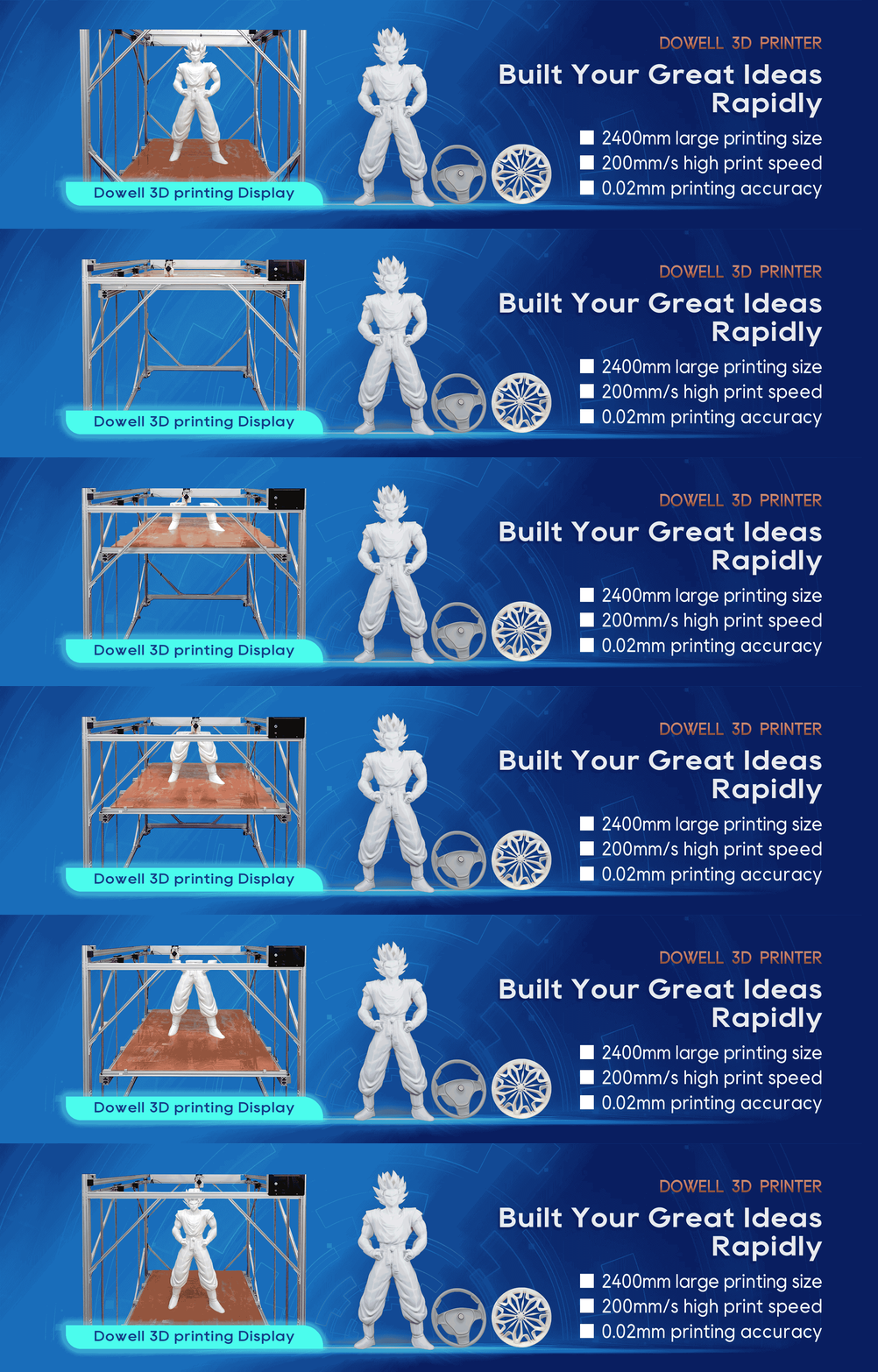
Large Format 3D Printer: How to Choose Build Volume
Opting for large-format 3D printing equipment is not just about going for the biggest. The essence of the
matter lies in understanding whether a 3D printer is capable of accommodating your parts and production
requirements without making costs unnecessarily high.
When talking about the printing of parts such as automotive models, industrial prototypes, molds, and
oversized parts that functionally belong somewhere large-scale manufacturing-wise, the right build volume
can mean fewer assembly jobs, simplified production, and easier manufacturing of large parts.
Okay, but how big a build volume will you physically require? These are the key factors you'll need to be
aware of prior to the purchase of an industrial 3D printer.
1. Start With the Size of Your Actual Parts
Don't compare the 3D printer specs first. First of all, calculate the size of the parts that you expect will be
the highest percentage of your output. Take into account dimensions such as length, width, height, and
printing position.
For instance, a car body that is going to be an automotive model might require a larger printable area on
the build platform, while an industrial prototype with a higher height would possibly need more printing
height along the Z-axis. Those who are routinely printing big housings or models for exhibition purposes are
bound to pay the greatest attention to all building dimensions.
The same is true for the rest. If you have a lot of small jobs but you rarely get to print huge components,
you might find it difficult to justify investing in an oversized printer, as it will be very wasteful.
Try the following way: make a chart of your average part sizes and find an average component size of the
largest parts that should be produced on a regular basis. Thus, you can compare large-scale 3D printers
and find the one that best meets your actual requirements.
2. Consider Whether You Need to Print in One Piece
One of the biggest advantages of a large-format 3D printer is the ability to produce larger components in
a single build.
If you have a small 3D printer and you want to print a model that is bigger than one layer height, then the
model will usually be divided into smaller chunks. These smaller pieces will need to be glued or otherwise
fused and maybe finished. All of this means you do more work, and it can create a visible joint or misalignment
between the two parts, to name two problems.
A larger build volume can help reduce these extra steps, particularly for automotive prototypes, architectural
models, large molds, and custom industrial parts.
However, one-piece printing is not always necessary. For some designs, splitting a model into smaller sections
may improve print reliability, simplify handling, or reduce the risk of a long print failing.
The best choice depends on your part geometry, finishing requirements, and production workflow.
3. Choose Build Volume Based on Your Application
Different applications place different demands on a large-scale 3D printer.
Automotive models and prototypes:
Prioritize sufficient length and width for body panels, exterior models, and other large components.
Industrial molds and tooling:
Consider the overall dimensions of the tool, its geometry, and the stability required throughout the print.
Product development:
Choose a build area that accommodates both full-size prototypes and smaller functional components.
Custom manufacturing:
Look for enough space to print large individual parts or arrange multiple smaller parts in one build.
For manufacturers handling varied projects, a flexible build volume can be more useful than a machine designed
around only one specific part size.
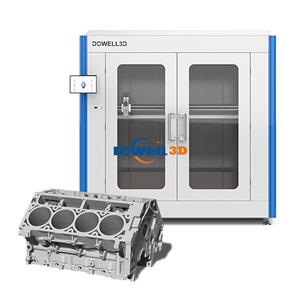
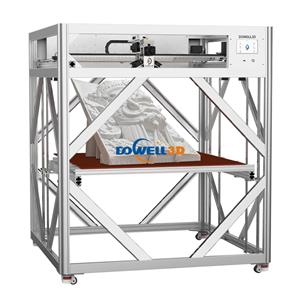
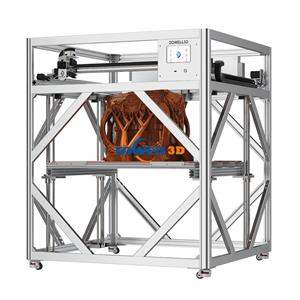
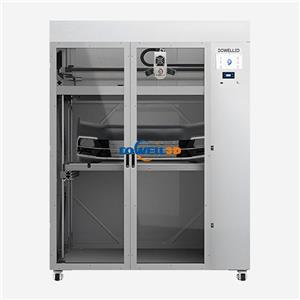
DOWELL3D offers large-format 3D printing solutions for oversized models and industrial applications. When evaluating
a suitable machine, compare the available build dimensions with your actual part files and expected workload.
4. Do Not Overlook Accuracy and Print Stability
A large build volume does not automatically mean better print quality.
If the 3D printer makes a huge part, then even the slightest variations will be visible after the print has covered
such a big printing area. Frame stiffness, motion control, bed leveling, extrusion consistency, and management
of temperatures are among the factors that can affect the outcome.
In fact, for printing large components that will be connected together or meet strict dimensional criteria, it is
especially crucial not to be off the mark.
If your application requires high precision, ask the manufacturer about dimensional accuracy, repeatability,
and performance across the full build area. Whenever possible, request sample prints or arrange a test using
a representative model.
A high-precision 3D printer should be evaluated against the tolerances your application actually requires, rather
than a headline specification alone.
5. Check Printing Time, Filament Use, and Operating Costs
Larger parts generally require more filament and longer printing times. A bigger machine can also increase the
cost of a failed print, especially when a job runs for many hours.
Before purchasing an industrial 3D printer, consider:
The average filament consumption per part.
Expected printing time for your typical models.
First-layer adhesion and the risk of warping.
The time required for support removal and post-processing.
Maintenance needs and the cost of machine downtime.
Having a larger build volume can raise productive capability by reducing the need to divide parts or by having
the possibility to print several components at a time. However, the true cost of saving can only be known when
it is matched up against the demand pattern and the way you do business.
Comparing the total cost per finished part is often more useful than comparing printer prices alone.
6. Leave Enough Room for Future Production Needs
Your current projects likely do not reflect your needs in 2 or 3 years. New product designs, bigger prototypes,
and altered customer requirements are just some of the ways an upturn in demand for printing capacity can occur.
That does not mean you should automatically choose the largest available machine. Instead, consider whether
a modest increase in build volume would allow you to handle additional applications without significantly
increasing equipment and operating costs.
Also check the machine's external dimensions, installation space, power requirements, and access for maintenance.
A printer may fit your part specifications perfectly but still be impractical for your workshop if the installation
requirements have not been considered.
7. How to Choose the Right Large Format 3D Printer
Before making a final decision, prepare a short checklist:
What are the dimensions of your most frequently printed parts?
Do you need to print them in one piece?
What dimensional tolerances and surface quality do you require?
Which filament types will your applications use?
How many parts do you expect to produce each week?
What are your budget, installation, and maintenance requirements?
Use these answers to compare machines based on practical production needs rather than build volume alone.
For businesses looking to manufacture oversized models or industrial components, DOWELL3D can be a starting
point when evaluating large format 3D printing solutions. Share your part dimensions, application, and production
goals to help identify a suitable machine configuration.
Conclusion
Choosing the right build volume comes down to finding the best balance between part size, print quality,
production efficiency, and total operating cost.
A machine that is too small may force you to divide parts and spend more time on assembly. One that is
unnecessarily large may increase costs without providing meaningful benefits.
The right large format 3D printer is the one that fits your real production requirements today while leaving
reasonable room for future projects.
Looking for a large format 3D printer for your application? Contact DOWELL3D to discuss your required
build dimensions and explore a suitable solution for your manufacturing needs.