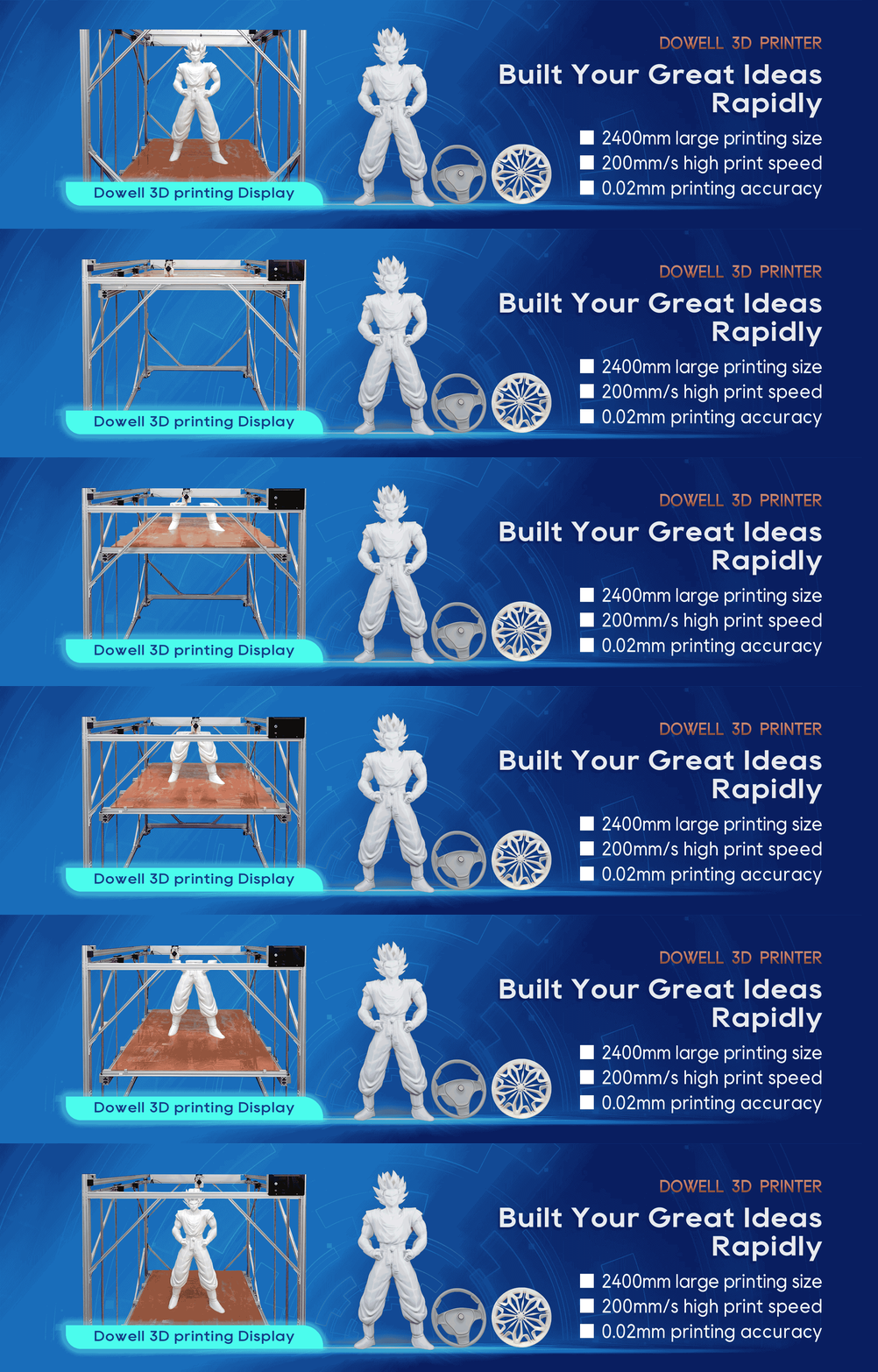
Is a Large Pellet 3D Printer Worth It?
If you run a workshop, a small factory, or even a serious prototyping lab, you've probably asked yourself this
question more than once. You already know that a standard desktop 3D printer can only do so much. Every time
a big order comes in, you either split the model into tiny pieces or send the job to an outside service. Both
options cost you time and money.
So you start looking at something bigger. Something like a large-format 3D printer. But not just any big machine –
one that uses pellets instead of regular spools. Is that the right move for you? Let's walk through it together.
First, what's a large pellet 3D printer?
Most people are used to filament printers – the kind where plastic thread goes from a spool into a hot end. A pellet
3d printer (also called a granule 3d printer) works differently. Instead of thread, you pour small plastic pellets into
a hopper.
The machine melts them on the fly and pushes the melted plastic through a nozzle. This is often called FGF 3d
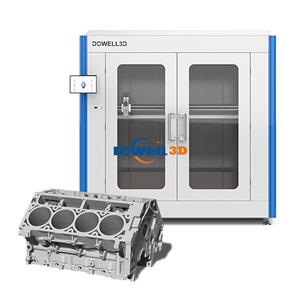
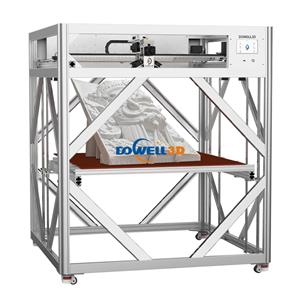
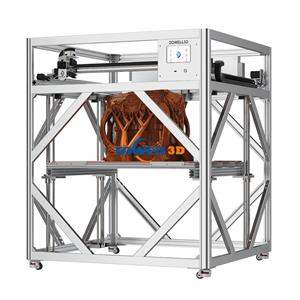
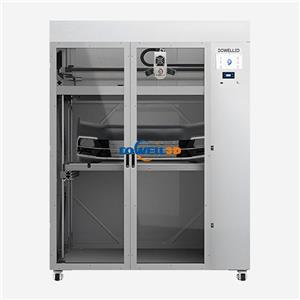
printer technology – fused granulate fabrication. And when you make it big, you get a large-format pellet 3d
printer, sometimes a big 3d printer, that can produce parts measured in meters, not centimeters.
The big question: Is it worth the investment?
Let's be honest – a professional 3d printer that runs on pellets does not come cheap. The upfront cost is higher than
most desktop filament machines. But "worth it" depends on what you need. Here are the real factors that separate
a good deal from an expensive mistake.
Material cost – where pellets win hard
Filament on spools is convenient. You just load it and go. But you pay for that convenience – roughly $20–$50 per kilo
for standard plastics like PLA or PETG. Pellets? The same plastic in pellet form often costs $5–$15 per kilo. Sometimes
even less if you buy in bulk. If you print a lot, that difference adds up fast.
I know one shop that prints large industrial jigs. They switched from a filament to a pellet 3d printer and cut material
cost by 60% in the first month. For them, the machine paid for itself in about eight months.
Print speed – not just bigger, faster
A large format 3d printer with a pellet extruder can push plastic much faster than a filament machine. Why?
Because pellets melt faster and can flow through a bigger nozzle. Typical filament printers use 0.4mm or 0.6mm nozzles.
Pellet extruders often run 1.0mm to 3.0mm nozzles. That means thicker layers and faster coverage. For large, simple
parts, you can cut print time by half or more.
Size matters – but not the way you think
When people search for a big 3d printer, they usually want to print large objects in one piece. No gluing, no seams.
A large format 3d printer can give you a build volume of one cubic meter or more. That's huge. If your primary
consideration is print speed, and you need to mass-produce a large volume of parts that do not require high levels
of fine detail, then a large-format granular 3D printer would be your ideal choice.
Where do pellet printers struggle?
No tool is perfect. And a granule 3d printer has some real downsides you need to know before you spend money.
Changeover is slow
With filament, switching from PLA to PETG takes a minute. With pellets, you have to empty the hopper, clean the
feeding system, and purge everything. It's messy and time-consuming. If you print ten different materials a week,
stick with filament.
Fine details are harder
A pellet extruder is not designed for miniatures or jewelry. The large nozzle means you lose sharp corners and small
features. If your work requires a high surface finish or fine details, a professional 3D printer with a 0.2mm or 0.4mm
nozzle is still your best friend.
Upfront cost and learning curve
A good industrial 3d printer that runs on pellets can cost anywhere from $12,000 to $100,000+. That's real money.
And you'll need to learn new slicing settings, different temperature profiles, and how to deal with pellet flow issues
like bridging or inconsistent feeding.
Who should buy a large pellet 3D printer?
You are a good candidate if:
You print parts that are bigger than 800mm in any direction on a regular basis.
You go through more than 10kg of plastic per month.
Your parts are mostly functional – not highly detailed models.
You have space, power, and ventilation for a large machine.
You buy plastic in bulk or even use recycled pellets.
You should probably skip it if:
You mainly print small, detailed models.
You switch materials every other print.
You don't have a dedicated workshop area.
You are on a very tight budget.
What about using recycled pellets?
One of the coolest things about a granule 3d printer is that you can use recycled plastic. Grind up failed prints, purge
blocks, or even clean industrial waste – as long as the pellets are consistent in size. That drops the material cost even
lower. Plus, it's a great story to tell your customers who care about sustainability.
Advice before you buy
Visit a trade show or ask for a demo. Run your own part on a pellet 3d printer – not a test cube. See how it handles
your real geometry. Also, check the nozzle system. Some cheap pellet extruders clog easily. Look for a proven design
with a screw feeder and good temperature control along the barrel. Dowell3D specializes in the manufacture of
reliable, large-format industrial 3D printers and FGF granular 3D printers. With over 12 years of experience in R&D,
manufacturing, and export, we can custom-tailor equipment to meet your parts, budget, and workflow. From
one‑meter builds to granule printing – choose DOWELL3D, proven and built for production.
And don't forget about software. A 3d machine this large needs a slicer that can handle big files and long print times.
Make sure the manufacturer provides a profile that works.
So… is it worth it?
For the right shop, a large format 3d printer running pellets is absolutely worth it – sometimes a game-changer. You
get lower material cost, faster prints, and the ability to make parts that simply wouldn't fit on a normal machine.
But for a hobbyist or someone who only prints small, detailed objects, it's overkill.
Think about your monthly plastic usage, your portion sizes, and how much you value your own time.
If the numbers line up, go for it.